
- Home Page
- My Account
- New Products
- Contact Us
-
Semiconductors
-
Circuit Protection
- Back
- Circuit Breakers & Accessories
- Circuit Protection Kits
- ESD Suppressors / TVS Diodes
- Fuse Holders
-
Fuses
- Gas Discharge Tubes - GDTs / Gas Plasma Arrestors
- LED Protection Devices
-
Power Outlet Strips
- Back
- Power Outlet Strips
- Resettable Fuses - PPTC
-
Surge Suppressors
- Back
- Surge Suppressors
-
Thermal Cutoffs
- Back
- Thermal Cutoffs
- Thermistors
- Thyristors
- Varistors
-
Connectors
-
Embedded Solutions
-
Enclosures
-
Engineering Development Tools
-
Industrial Automation
-
LED Lighting
-
Optoelectronics
- Passive Components
-
Power
- Sensors
-
Test & Measurement
-
Tools & Supplies
-
Wire & Cable
-
Opto-electronics
- ON Semiconductor LM324
-
Electromechanical
- Back
- Audio Devices
-
Circuit Breakers
- Back
- Circuit Breakers
-
Encoders
- Back
- Encoders
- Hardware
-
I/O Modules
- Back
- I/O Modules
- VCC 06-03
-
Thermal Management
- Home Page
- My Account
- New Products
- Contact Us
-
Semiconductors
-
Circuit Protection
- Back
- Circuit Breakers & Accessories
- Circuit Protection Kits
- ESD Suppressors / TVS Diodes
- Fuse Holders
-
Fuses
- Gas Discharge Tubes - GDTs / Gas Plasma Arrestors
- LED Protection Devices
-
Power Outlet Strips
- Back
- Power Outlet Strips
- Resettable Fuses - PPTC
-
Surge Suppressors
- Back
- Surge Suppressors
-
Thermal Cutoffs
- Back
- Thermal Cutoffs
- Thermistors
- Thyristors
- Varistors
-
Connectors
-
Embedded Solutions
-
Enclosures
-
Engineering Development Tools
-
Industrial Automation
-
LED Lighting
-
Optoelectronics
- Passive Components
-
Power
- Sensors
-
Test & Measurement
-
Tools & Supplies
-
Wire & Cable
-
Opto-electronics
- ON Semiconductor LM324
-
Electromechanical
- Back
- Audio Devices
-
Circuit Breakers
- Back
- Circuit Breakers
-
Encoders
- Back
- Encoders
- Hardware
-
I/O Modules
- Back
- I/O Modules
- VCC 06-03
-
Thermal Management
- Home /
- All Products /
- Connectors /
- Card Edge Connectors /
- PCI Express Connectors / PCI Connectors
PCI Express Connectors / PCI Connectors
PCI Express connectors are the edge-card interface used on add-in cards and the matching receptacle on motherboards and backplanes. Each lane is a serial, point-to-point link — nothing shared, nothing arbitrated — which is what separates PCIe architecturally from the old parallel PCI bus. Legacy PCI (32-bit or 64-bit, running at 33 or 66 MHz) still appears on some industrial and embedded boards with long product cycles, but PCIe has replaced it for essentially all new designs.
Lane configuration runs x1, x4, x8, and x16. Bandwidth scales linearly with lane count, so generation matters as much as width. Gen 3 delivers 8 GT/s per lane, Gen 4 doubles that to 16 GT/s, Gen 5 reaches 32 GT/s, and Gen 6 hits 64 GT/s using PAM4 encoding. Physical slots are generally backward and forward compatible — a Gen 4 card in a Gen 3 slot negotiates down to Gen 3 speeds — but connector and trace impedance requirements tighten with each generation, so what cleared signal-integrity margins at Gen 3 may not at Gen 5.
Specifying the right connector means pinning down lane configuration first, then generation (which fixes your signal rate and loss budget), card form factor (full-height/full-length, half-height, low-profile), and mount orientation — right-angle for backplane or riser use, vertical for direct board mounting. A x16 slot can physically accept a x1 card, so mixed-width support is worth confirming if the design calls for it.
Engineers working in storage will run into PCIe-based connector variants in the same category. U.2 (SFF-8639) is the enterprise drive interface for 2.5-inch NVMe devices. M.2 (NGFF) covers SSDs, wireless modules, and other compact peripherals — both use PCIe signalling but are distinct physical connectors with their own mating hardware.
TRX sources PCIe and legacy PCI connectors from Amphenol, Molex, TE Connectivity, and Samtec through authorised distribution. No minimum order — pull a handful to qualify a design before committing to production volumes. In-stock lines ship to Johannesburg, Cape Town, Durban, and Pretoria; for parts that need to be sourced, we'll quote you a real lead time.
Send us your part number or describe the application — we'll come back with availability and pricing.

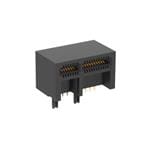


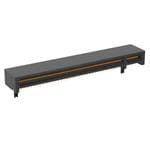
PCI Express Connectors / PCI Connectors
- 697 Jacques Street, Moreleta Park, Pretoria
- [email protected]
- +27 (0)12 997-0504